One useful system, built around your way of working.
When a spreadsheet or a collection of disconnected tools no longer fits, a custom application can bring the right information and actions into one place.
Discuss your project →Define the job before the software.
A customer portal, a scheduling tool, and an internal dashboard serve different people. We begin with who will use the system, what they need to do, and which records they need to see. This keeps the first version focused instead of turning it into a long list of unrelated features.
Make the everyday actions clear.
The interface should support the work: finding a customer, choosing an appointment, updating a status, or reviewing a request. We plan the data structure, screens, permissions, and connected services together. If payment handling is included, the scope identifies the payment provider and the events the application needs to record.
Build a version you can evaluate.
A useful first release gives you something concrete to test with realistic scenarios. We agree on acceptance checks, review the important flows, and plan how existing information will be brought in. Documentation, access ownership, hosting, and support are discussed before handoff—not left as assumptions.
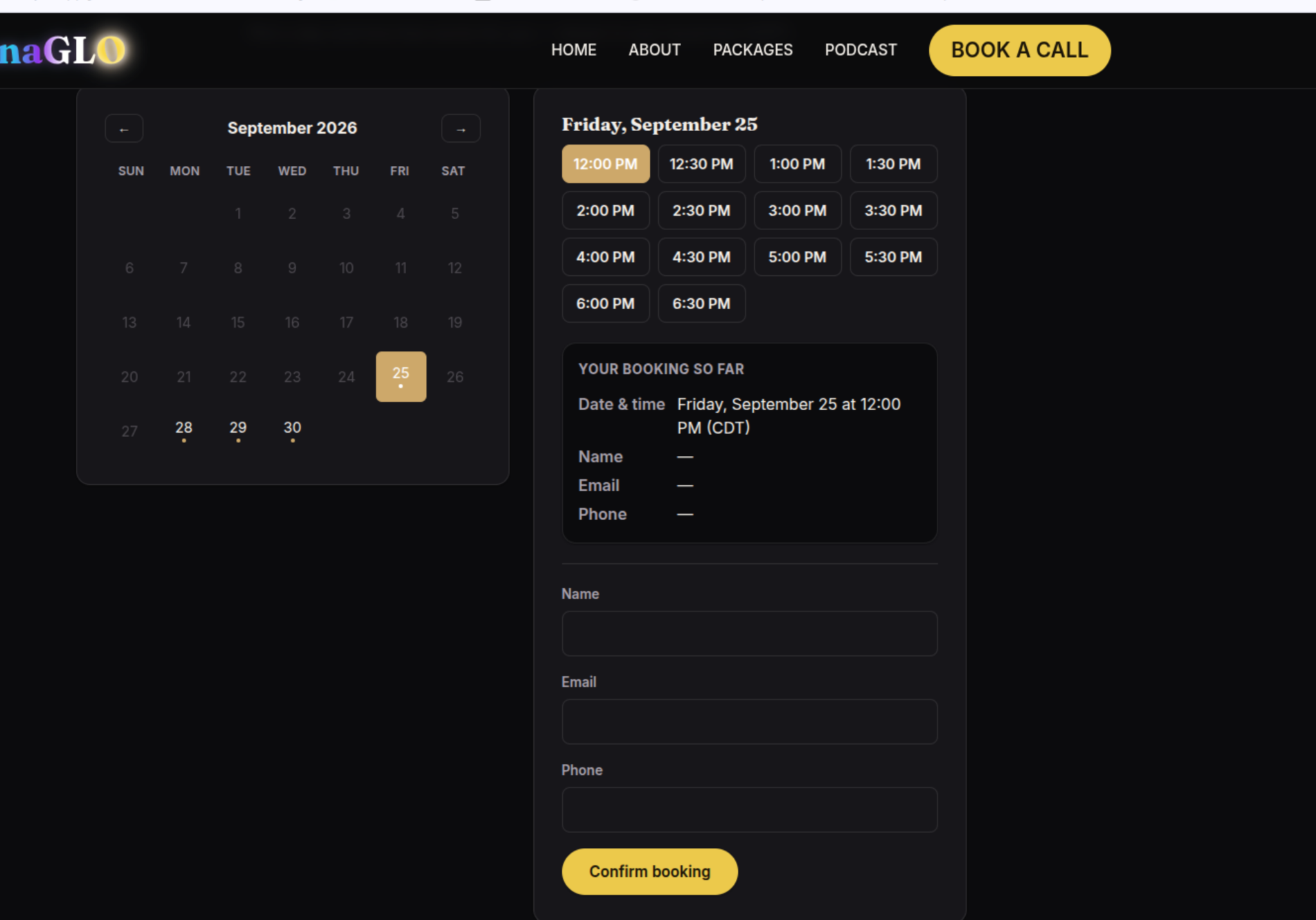
Glo appointment experience
A custom calendar brings date selection, available times, client details, and a booking summary into a single flow.
A few useful answers.
Should we build custom software or buy an existing tool?
We start by examining the workflow. If an existing product meets the important requirements, configuration or integration may be enough. A custom build makes more sense when the core process needs something those tools do not provide.
Can different users have different access?
User roles and permissions can be part of the application scope. We identify which people should view, edit, or manage each type of information before implementing access.
Can we add features later?
Yes. Planning a focused first version leaves room to evaluate real use before adding more. Later features are scoped against the existing application and business priorities.
What might come next.
Start with the part that should work better.
Tell us what you do, what is getting in the way, and what a useful next step would look like. We’ll help define the scope before the build.